

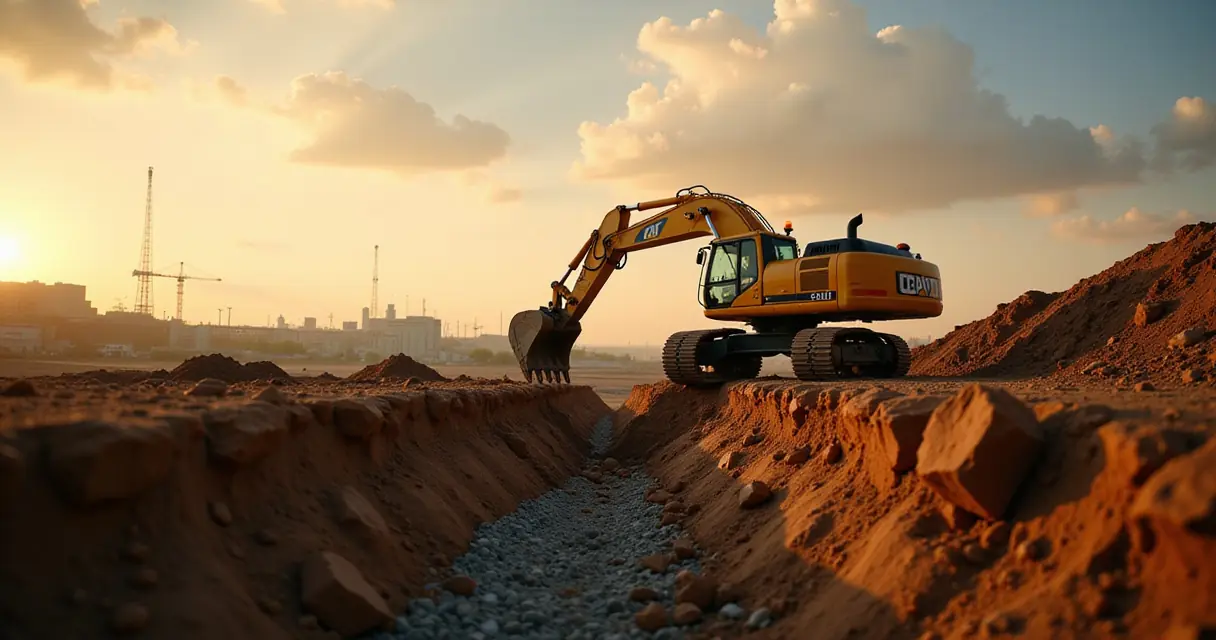
Excavators are on almost every construction site, and skilled excavator operators stay in demand. The good news is that excavator operator training can start online, for free, before you spend a dollar on a course or a school.
The old barrier was cost. Formal excavator training used to mean paying a private school up front, before you ever earned a paycheck as an operator.
That has changed. A free online course lets you learn the safety and the theory first, then bring that head start into real, hands-on excavator training.
This guide is honest about what a free course does. It gives you real foundations and a certificate of completion, not the hands-on hours and OSHA safety that a paid job requires.
Start a free excavator course
Why excavator operator training is worth it
The pay is a strong reason to start training. Excavator work falls under construction equipment operators, who earned a median wage of 58,320 dollars per year in May 2024, according to the U.S. Bureau of Labor Statistics.
Demand is steady, not a fad. The BLS projects employment for construction equipment operators to grow about 4 percent through 2034, and retirements keep opening seats for new operators every year.
Best of all, an excavator career does not require a degree. Most operators start with a high school diploma and build a career through training, an apprenticeship, or time on the job.




Where excavator operators work and which jobs pay most
Excavator operators work in building construction, road and bridge work, utilities, pipelines, and demolition. That range is part of why the career stays stable across the years.
Pay climbs with skill and setting. Heavy construction, pipeline, and specialty work often pay more than general site work, and operators who add machines earn more over a career.
Union and prevailing wage jobs also lift pay. That is one reason the apprenticeship route, covered below, is such a strong path for a new excavator operator.
What an excavator does on site
Excavators dig trenches, foundations, and holes, and they lift and move heavy material. They are one of the most useful machines in construction and earthmoving.
Learning the controls, the swing, and the reach of the machine takes real practice. Good operators also read the ground, manage loads, and keep the crew around them safe.
That judgment is why training matters. An excavator is powerful, and a trained operator prevents the accidents and damage that cost a job time and money.
Types of excavators you might operate
Excavators come in several sizes, and each fits a different kind of job. Knowing them helps you pick the training and the work that match your goals.
Compact and mini excavators
Mini excavators handle tight sites, landscaping, and utility work. They are a friendly place to build early skill and confidence as a new operator.
Standard crawler excavators
Standard excavators do the bulk of digging and trenching on construction sites. Most training and most jobs center on this size of machine.
Large and long-reach excavators
Large and long-reach machines take on heavy earthmoving, demolition, and specialty work. They usually reward operators who already have solid hours and a strong safety record.
What excavator certification actually requires
Here is the part the “get certified online” ads leave out. An excavator does not have a single national certification the way a crane does, but that does not mean a free course is enough.
A free online course gives you theory, safety, and a certificate of completion. The job also wants hands-on hours on a real excavator and OSHA safety training, and you may need a CDL to haul the machine between sites.
What employers really want is proof you can run the machine safely. That comes from supervised seat time, not from a video, plus the OSHA safety knowledge every jobsite expects.
Many operators also need a commercial driver license, or CDL, just to move the excavator between jobsites. The CDL is a paid, state-issued license that a free course cannot hand you.
What “free” really covers, and what it does not
Free covers the knowledge. You can learn machine parts, safety rules, and load basics without paying anything, and you finish the course with a certificate that shows initiative.
Free does not cover the seat time on a real machine, and it does not cover a CDL if your role needs one. Those are separate steps, and it is honest to plan for them from the start.
How online excavator training works, and where it stops
Online training is genuinely useful for the parts that live in your head. You learn machine components, safety rules, and load basics before you ever climb in.
Where it stops is the seat time. No app can teach your hands the feel of the boom, the bucket, and the swing on uneven ground.
So treat the free course as step one of your training. It gets you ready to walk into hands-on practice already knowing the language and the safety rules.
What you need to learn
- Excavator parts and controls, and what each one does
- Core safety rules and OSHA-aligned practices
- Daily inspection and basic maintenance checks
- Digging, lifting, and load handling basics
- Reading the ground and working safely around people
- How certification and licensing steps fit together
Safety practices every excavator operator should know
Safety is the part of the job employers care about most, and it is where a free course pays off early. Good habits protect you, the crew, and the machine.
- Inspect the machine before every shift and report any problem
- Wear the right protective gear and keep it on all day
- Know your blind spots and use a spotter when needed
- Call to locate underground utilities before you dig
- Never swing a load over people, and stay clear of trench edges
Knowing these rules before your first day of hands-on training makes you safer and easier to hire. It is one more reason the free foundations are worth finishing.
Best free and low cost resources
These are legitimate starting points for excavator training. The ones that lead to a real job are often in person and funded, not a quick online badge.
- Alison: free online courses in equipment and construction topics, with a completion certificate.
- OSHAcademy: free safety training aligned to OSHA topics, useful on every site.
- CareerOneStop: find local, WIOA funded hands-on training near you.
- IUOE apprenticeship: paid training with real hours through the operating engineers union.
Is excavator training really free? The honest cost breakdown
The online course is free. The steps after it may not be, so here is an honest breakdown of where costs can appear on the way to a paid excavator job.
| Step | Typical cost |
|---|---|
| Online foundations and safety course | Free |
| Hands-on training at a private school | Paid, unless funded by WIOA or an employer |
| CDL to haul the machine, if required | Paid, state-issued |
| Apprenticeship route | You earn while you train |
How long it takes to become an excavator operator
The free online foundations take days to a few weeks at your own pace. That part depends only on how fast you move through the course.
Hands-on training adds more time. A short private program can run a few weeks, while an apprenticeship builds skill over a few years while you earn.
The honest takeaway is simple. You can start learning today for free, but becoming job ready is a path, not a single afternoon.
The smartest free path: apprenticeship
If you want real training without debt, an apprenticeship is the strongest option. Programs run by the operating engineers union combine classroom learning with paid seat time.
You earn a wage while you train, and you finish with real hours that employers respect. Government workforce programs like WIOA can also fund training if you qualify.
Use the free online course to prepare for the entry test and interview. Walking in with the basics already learned makes you a stronger candidate.
Can an online course replace in person training?
No, and any site that says otherwise is selling you something. The classroom part can be online, but the machine part cannot. You need real hours on a real excavator.
Employers hire operators who can safely run the excavator, not people with a printout. Use the free course to prepare, then get real seat time.
Will employers accept your certificate?
As a signal, yes. A completion certificate shows initiative and that you understand the basics of excavator operation before day one.
As a substitute, no. It does not replace the hands-on hours, the OSHA safety card, or a CDL if your role requires one.
Red flags to watch out for
- Sites promising a “license” or “certification in days” fully online
- Courses that charge for an official license they cannot issue
- Pages that never mention hands-on training, OSHA, or a CDL
- Badges that say “certified” when they only mean “finished the video”
Expanding your skills to other machines
Once you are comfortable on an excavator, adding another machine raises your value and your pay. Many operators go on to run bulldozers, dump trucks, or cranes.
Cranes pay among the best, though they require NCCCO certification. Each machine you learn opens more of the construction job market to you.
Tips to start your excavator career strong
A few simple moves make your first months smoother and help you stand out to employers looking for reliable operators.
- Finish the free course and save your certificate to show initiative
- Ask about helper or ground roles to get near the machines
- Keep a clean record and a reliable schedule from day one
- Learn your local pay rates so you can negotiate fairly
- Say yes to safety training whenever it is offered
Operators who treat the early steps seriously move up faster. The free foundations are the easiest first win, so start there and keep building real hours.
Your next steps
Start free, then follow the honest path. For the full picture across every machine, read our main guide to free heavy equipment training and see all the free paths in the high-paying jobs hub.
- Finish a free excavator or heavy equipment course to learn the basics
- Check your state rules and whether you need a CDL
- Get hands-on training through a local program, WIOA, or an apprenticeship
- Apply, lead with the free certificate, and keep building real hours
Frequently asked questions
Is there a free excavator operator course?
Yes. Sites like Alison offer free online courses that teach the foundations and give a certificate of completion. Hands-on training on a real machine is a separate step.
Do I need a license to operate an excavator?
There is no single national license, but employers require safe, proven skill and OSHA safety. You often need a CDL to haul the machine between sites.
How much do excavator operators make?
Excavator work falls under construction equipment operators, who earned a median of 58,320 dollars per year in May 2024, according to the BLS. Pay rises with skill and setting.
How long does excavator training take?
Online foundations take days to weeks at your own pace. Hands-on training adds weeks to a few years, depending on whether you choose a school or an apprenticeship.
Can I get excavator training for free?
The foundations, yes. Real hands-on training can also be free through WIOA funding or a paid apprenticeship, if you qualify.
Which is easier to start with, excavator or dump truck?
Both are common entry points. A dump truck needs a CDL, while an excavator relies more on supervised seat time and OSHA safety.
Do I need my own excavator to train?
No. Schools and apprenticeships provide the machines. The free online course needs only a phone or computer and an internet connection.
Will an online course alone get me hired?
It helps as a signal, but most employers want real seat time and the safety credentials for the role.