

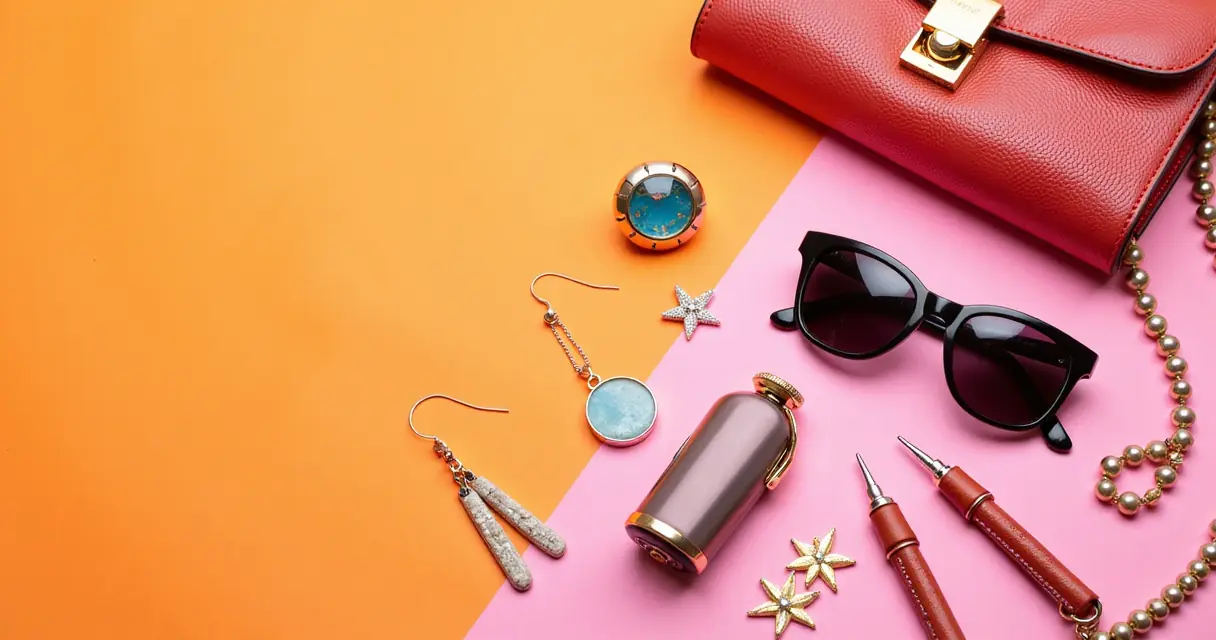
More than half of Shein’s testing program participants focus on just one category: clothing. That leaves a huge opening in footwear, accessories, bags, gadgets, and home products, where competition is lower and the chances of being selected increase significantly.
This guide covers all the non-clothing categories within the free products program. From sneakers to kitchen organizers, each section includes what’s actually available, what quality to expect, and how to make the most of each category.
The goal is clear: to help you diversify your applications, receive more products, and write reviews that keep you active in the program.
What Categories Exist Beyond Clothing
Shein’s testing center isn’t limited to t-shirts and dresses. The platform offers products from at least five main categories outside of clothing: footwear, accessories and jewelry, bags and wallets, electronics and gadgets, and home products.
The distribution varies by season, but on average, clothing represents between 55% and 65% of available products. The rest is divided among the other categories, with accessories and footwear being the most stable segments throughout the year.
| Category | Estimated Proportion | Competition | Restocking Frequency |
|---|---|---|---|
| Clothing (all) | 55-65% | High | Daily |
| Footwear | 8-12% | Medium | Weekly |
| Accessories and jewelry | 10-15% | Low-Medium | Weekly |
| Bags and wallets | 5-8% | Low | Biweekly |
| Electronics and gadgets | 3-5% | Low | Biweekly |
| Home and decor | 5-8% | Low | Biweekly |
The strategic advantage lies in those low-competition categories. While hundreds of users apply for the same dress, applications for home items or gadgets can be a fraction of that volume. That directly translates to more approvals.
Footwear: Types, Sizes, and Real Quality
Footwear is one of the most interesting categories in the program because it combines high perceived value with moderate competition. The types of footwear that appear most frequently include athletic sneakers, flat sandals, short boots, flip-flops, and casual shoes. For a detailed guide on each type, check out the complete guide to free shoes and sneakers on Shein.


The available styles tend to be casual or athletic. Formal dress shoes and tall leather boots rarely appear. The average value of footwear in the program ranges from $15 to $35 USD, making them one of the products with the best value-to-effort ratio.
Size Conversion Chart
One of the biggest mistakes when applying for footwear is choosing the wrong size. Shein uses the European (EU) system as its main reference, but the conversion doesn’t always match local brands.
| EU | US Women’s | US Men’s | CM (foot length) |
|---|---|---|---|
| 36 | 5.5 | 4 | 23.0 |
| 37 | 6.5 | 5 | 23.5 |
| 38 | 7.5 | 6 | 24.0 |
| 39 | 8.5 | 7 | 24.5 |
| 40 | 9 | 7.5 | 25.5 |
| 41 | 9.5 | 8 | 26.0 |
| 42 | 10 | 8.5 | 26.5 |
| 43 | 11 | 9.5 | 27.5 |
The most practical recommendation: measure your foot in centimeters and use that column as your main reference. US sizes vary between manufacturers, but centimeters don’t lie.
Quality and Durability
Shein’s athletic sneakers work well for casual use, though they don’t replace technical footwear for intense sports. The soles are typically EVA rubber, lightweight but with less cushioning than specialized brands. Sandals and flip-flops have acceptable durability for the price, which in this case is zero.
For footwear reviews, what makes the difference are photos showing the actual fit on the foot, sole details, and an honest mention of the comfort level after wearing them for several hours. That type of review leads to re-selection in the program.
Accessories and Jewelry: The Easiest Way In
If there’s one category where approval odds are consistently high, it’s accessories. The products tend to have low values (between $3 and $12 USD), which means Shein takes on minimal risk by sending them out. For a complete breakdown of this category, check the guide to free accessories on Shein.
The most common subcategories are:
- Sunglasses: trendy models, basic UV protection, plastic or lightweight metal frames
- Jewelry: earrings, necklaces, rings, bracelets. Materials include zinc alloy, stainless steel, and in some cases, 925 silver
- Belts: faux leather and fabric, with metal buckles. Most come in adjustable sizes
- Scarves and shawls: polyester or chiffon, with seasonal prints
- Hats and caps: sports caps, bucket hats, beach hats
Materials and Quality Expectations
Shein’s jewelry primarily uses zinc alloys with gold or silver plating. It’s not fine jewelry, and the plating wears off with frequent use, water contact, or sweat. But for occasional wear and accessory rotation, the cost-benefit ratio is hard to beat when the cost is zero.
The sunglasses serve their aesthetic purpose. UV protection is declared on most models, although they’re not comparable to specialized optical brands. For everyday use and photos, they work perfectly.
Accessories are the ideal category for those just starting out in the program. The low product value increases the approval rate, and the variety allows you to apply for several items simultaneously without competing for the same items as most other users.
Bags and Wallets: How to Evaluate Quality Without Touching the Product
The bag category combines high perceived value with relatively low competition in the testing program. The types that appear most frequently are small backpacks, tote bags, crossbody bags, event clutches, and zippered wallets. The specialized guide to free bags and wallets goes deeper into each of these styles.
What to Check Before Applying
When you can only see product photos, there are five key quality indicators:
- Declared material: PU leather (faux leather) is the most common. Quality varies widely within that category, but other buyers’ reviews tend to be honest about it
- Visible stitching: detail photos showing regular, uniform stitching are a good sign
- Zipper: bags with metal zippers tend to last longer than those with plastic ones
- Interior lining: if the photos show a lining, the product generally has better overall finish
- Hardware: buckles, chains, and heavy metal closures indicate better construction
Sizes and Capacity
Shein lists dimensions in centimeters (length x width x height). For quick reference: a standard crossbody bag measures approximately 20 x 14 x 8 cm, enough for a phone, keys, and wallet. A tote bag typically measures between 30 x 35 x 12 cm, suitable for a 13-inch laptop and everyday items.
Shein bags in the $15-$25 USD range offer quality comparable to products from local fast fashion stores. The program advantage is obvious: you can try various styles at no cost, and bag reviews tend to generate visually appealing content that improves your profile for future selections.
Electronics and Gadgets: What to Really Expect
Shein’s electronics category requires calibrated expectations. We’re not talking about smartphones or tablets. What the program offers as “electronics” are tech accessories and low-cost gadgets, valued between $5 and $20 USD. You can see the full breakdown in the guide to free electronics and gadgets on Shein.
The most frequent products in this category are:
- Wireless earbuds: entry-level TWS, with acceptable audio quality for calls and casual music listening
- Phone cases: silicone, TPU, or hard plastic, with trendy designs
- LED lights: LED strips for decoration, USB desk lights, night lights
- Cables and chargers: USB-C cables, phone stands, adapters
- Laptop accessories: sleeves, stands, mouse pads
Realistic Gadget Quality
Shein’s wireless earbuds work. They don’t compete with AirPods or brands like JBL or Sony, but for a free product, the sound quality and battery life (generally 3-5 hours) are sufficient for basic daily use. Phone cases, on the other hand, are one of the best-value products in the entire program: they fulfill their protective function and the designs are constantly updated.
LED lights represent an interesting option because they generate eye-catching visual content for reviews, which improves your profile quality. A ring light or an LED strip installed in a space produces attractive photos that Shein values for re-selection.
Home Products: The Least Explored Niche
The home category is probably the least competitive in the entire program, and that makes it a real opportunity for users looking to maximize their approvals. The guide to free home products on Shein covers this category in detail.
What appears under the “home” label in the program falls into three main groups:
Organization and Storage
Organizer boxes, drawer dividers, adhesive hooks, small shelves. These are functional products with low unit value ($3-$10 USD) but extremely useful. The approval rate in this subcategory tends to be high precisely because few users actively seek it out.
Decor
Decorative cushions, pillowcases, photo frames, decorative candles, artificial plants, small rugs. Decor items have the advantage of producing highly visual reviews: a before-and-after photo of a space decorated with the product generates engagement and shows Shein that the tester produces quality content.
Kitchen and Bathroom
Basic kitchen utensils, spice organizers, soap dispensers, shower curtains, towel sets. Quality varies in this subcategory, but silicone organizers and utensils tend to have good durability.
General Comparison: Availability and Value by Category
To make informed decisions about where to focus your applications, this table summarizes the five main non-clothing product categories in the program.
| Category | Average Availability | Estimated Value (USD) | Competition | Ideal For |
|---|---|---|---|---|
| Footwear | Medium-High | $15-$35 | Medium | Users with a review history |
| Accessories | High | $3-$12 | Low-Medium | Program beginners |
| Bags | Medium | $10-$25 | Low | Those seeking higher-value products |
| Electronics | Low-Medium | $5-$20 | Low | Tech-savvy users with detailed reviews |
| Home | Low-Medium | $3-$15 | Very Low | Maximum approval rate |
The most effective strategy isn’t choosing a single category but distributing your applications. Applying to two or three different categories per cycle increases the overall chances of receiving at least one product.
Practical Strategy: How to Diversify Your Applications
Most users who consistently receive products follow a similar pattern. They don’t limit themselves to one category or apply for everything in sight. Instead, they combine high-value products (footwear, bags) with high-probability products (accessories, home items).
An approach that works: for every application for a pair of shoes or a bag, include two or three applications for small accessories or home items. This keeps the flow of incoming products and active reviews going, which in turn improves your profile for future selections of higher-value products.
Reviews of non-clothing products also tend to be more useful for other shoppers, because in categories like electronics or footwear, technical details (battery life, actual size fit, material durability) provide information that catalog photos don’t show. Shein values that type of content and prioritizes it when selecting testers.
Common Mistakes When Applying Outside the Clothing Category
There are patterns that reduce the approval rate in these categories. Knowing them helps you avoid them:
- Choosing the wrong shoe size: measure your foot in centimeters before applying. Don’t rely on the US conversion because it varies between manufacturers
- Generic electronics reviews: a simple “works fine” adds no value. Shein prioritizes testers who include real-use details, durability notes, and comparisons
- Ignoring context photos: in home and decor, a photo of the product in its place (shelf, kitchen, desk) is worth more than ten photos of the packaging
- Only applying for expensive products: high-value items get more applicants. Combining with inexpensive accessories keeps your profile activity up
- Missing the review deadline: this applies to all categories, but with non-clothing products, users tend to forget the deadline because the item is “already in use.” Setting a reminder is essential
Frequently Asked Questions
Can you get free shoes through Shein’s program?
Yes. Footwear is one of the available categories in the testing center. It includes sneakers, sandals, short boots, and flip-flops. Availability varies by season, with more sandal options in summer and boots in winter.
Are the accessories and jewelry from the program good quality?
The quality is proportional to the product’s value. The jewelry uses zinc alloys with metallic plating that wears off with frequent use. Sunglasses and belts offer acceptable quality for casual wear. As a free product, the value proposition is very favorable.
Are electronic products available to test for free?
Yes, although the category is limited to tech accessories: wireless earbuds, phone cases, LED lights, cables, and stands. It does not include high-value devices like smartphones or tablets.
How do you choose the right shoe size on Shein?
The most reliable method is to measure your foot in centimeters (length from heel to the tip of the longest toe) and use the product’s conversion chart. EU sizes are Shein’s main reference, but centimeters eliminate the ambiguity between sizing systems.
Are the free bags the same as the ones sold in the store?
They are exactly the same products. The testing program sends items from the regular catalog in exchange for an honest review. There are no different versions or reduced quality for test products.
Which category has the highest approval probability?
Home and decor has the lowest competition in the program, closely followed by small accessories. Both categories are ideal for those looking to maximize the number of products received, since fewer users apply for them.
Can you request products from multiple categories at the same time?
Yes. There’s no restriction limiting applications to a single category. In fact, distributing requests across multiple categories is the strategy that produces the best results over time.
Do home products also require a review with photos?
All products in the program require a review, and photos are highly recommended in any category. For home products, photos of the item in use (installed, decorating a space, organizing a drawer) create high-value reviews that improve your chances of future selections.