

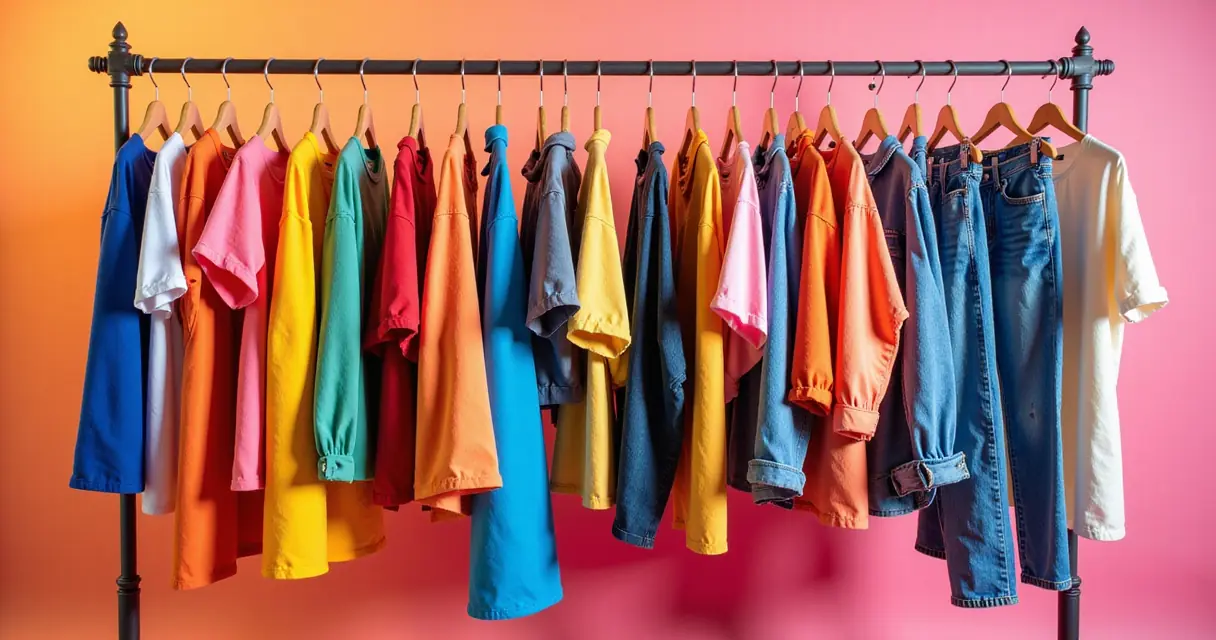
Every week, thousands of new garments appear in Shein’s free trial program without most users even knowing about it. Dresses, t-shirts, joggers, kids’ outfits: all available at zero cost in exchange for an honest review. The problem isn’t a lack of options, but knowing where to look and how to maximize your chances of approval. This guide breaks down by gender and category exactly what clothing you can get, in what sizes, with what level of competition, and what the smartest strategy is to dress for free.
Clothing dominates the trial program
Clothing accounts for between 60% and 70% of all products available in Shein’s free trial center. This makes it the largest category by far, well above accessories, home goods, or tech. The reason is simple: Shein needs constant reviews of its textile collections to position products in its search algorithm.
The most common clothing categories in the program are casual, athletic, basics, and seasonal. During spring and summer, lightweight dresses, tops, and skirts appear more frequently. In fall and winter, jackets, sweatshirts, and long pants take center stage. Basic items (plain t-shirts, leggings, underwear) are available year-round.
Restocking frequency and competition
The program updates with new products every Monday and Thursday. These two days are the key moments to browse the catalog and request items before slots fill up. The first few hours after the update offer the highest availability.
Clothing is the most competitive category because it’s the most desired. However, it’s also the most rewarding: it allows you to build a complete wardrobe without spending any money. The key is to avoid competing where everyone else competes. While most users request trendy dresses, athletic wear, underwear, and basics have significantly higher approval rates.
The program refreshes on Mondays and Thursdays. Check the catalog within the first 2-3 hours after the update to find the widest variety of sizes and styles.
Women’s clothing: the largest category
The women’s section accounts for between 65% and 75% of all clothing available in the program. The variety is enormous and covers virtually any wardrobe need. For a detailed guide on all available women’s garments, check out the article on free women’s clothing on Shein.
Most common women’s garments
- Dresses: Large selection in casual, midi, and printed styles. High competition but constant restocking.
- Blouses and tops: From plain basics to seasonal designs. Very accessible category.
- Pants: Jeans, cargo, palazzo, and joggers. Good variety of styles.
- Skirts: Mini, midi, and long. Less volume than dresses but moderate competition.
- Sets: Two-piece sets (top + pants, top + skirt). Very popular and competitive.
- Activewear: Leggings, sports tops, gym sets. Lower competition, high approval rate.
Women’s size chart
| Shein Size | EU Equivalent | Bust (cm) | Waist (cm) | Availability |
|---|---|---|---|---|
| XS | 34 | 78-82 | 60-64 | Medium |
| S | 36 | 82-86 | 64-68 | High |
| M | 38 | 86-90 | 68-72 | Very high |
| L | 40 | 90-94 | 72-76 | High |
| XL | 42 | 94-98 | 76-80 | Medium |
| XXL | 44-46 | 98-104 | 80-86 | Low |
Sizes S, M, and L are the most abundant in the program. If your usual size falls between two options, go with the larger one: Shein tends to run slightly small in women’s garments, and sizing up makes it easier to write a positive review without forcing your rating.
Approval rates by women’s subcategory
Not all women’s garments compete on equal footing. Categories with less demand offer better odds:
| Subcategory | Competition | Estimated approval rate |
|---|---|---|
| Trendy dresses | Very high | 15-20% |
| Blouses and tops | High | 20-25% |
| Sets | High | 18-22% |
| Casual pants | Medium | 25-30% |
| Skirts | Medium | 25-35% |
| Activewear | Low-medium | 35-45% |
| Underwear and basics | Low | 40-50% |
Real quality by type of women’s garment
Quality varies noticeably depending on the garment. Basic t-shirts and tops usually offer good value: soft fabrics, acceptable stitching, and reasonable durability for casual wear. Seasonal dresses are more unpredictable: some are pleasantly surprising while others feature thin fabrics or uneven finishes.
Shein’s activewear has improved considerably in recent program cycles. High-waisted leggings and medium-support tops deliver competent performance for moderate exercise. Athletic sets, in particular, consistently receive high ratings.
The riskiest garments in terms of quality are party dresses and clothing with elaborate details (sequins, embroidery, lace). These products show greater variability between units.
Men’s clothing: fewer options, more opportunities
The reality of the program for men is quite different from what many expect. Men’s clothing represents only between 15% and 20% of the free trial catalog. However, this apparent limitation hides a real advantage: the competition is drastically lower.
For a complete analysis of men’s options, check out the guide on free men’s clothing on Shein.
Most common men’s garments
- T-shirts: The star item. Basics, printed, and oversized. Constantly present in the program.
- Pants: Joggers, cargo, and chinos. Less variety than women’s but regular restocking.
- Jackets: Bomber, denim, and windbreakers. Appear with seasonal frequency.
- Activewear: Shorts, technical t-shirts, sets. The subcategory with the best approval ratio.
- Sweatshirts and hoodies: Available year-round. Good overall quality.
Men’s size chart
| Shein Size | EU Equivalent | Chest (cm) | Waist (cm) | Availability |
|---|---|---|---|---|
| S | 44 | 88-92 | 72-76 | Medium |
| M | 46-48 | 92-96 | 76-80 | High |
| L | 50 | 96-100 | 80-84 | High |
| XL | 52 | 100-104 | 84-88 | Medium |
| XXL | 54 | 104-108 | 88-92 | Low |
Sizes M and L are the most available. Shein’s men’s sizing is more true to European standards than the women’s, although it’s still recommended to check the exact measurements for each product before requesting.
The men’s competitive advantage
Where a request for a women’s dress competes against hundreds of users, a request for a men’s t-shirt may face only a fraction of that demand. Approval rates for men’s clothing range between 30% and 50%, depending on the subcategory. This makes the men’s section one of the most efficient paths for accumulating free products in the program.
Kids’ clothing: an underexplored niche
Kids’ clothing exists in the program and ranges from babies to preteens. Although the volume is smaller than in adults, the competition is too, creating a favorable balance for those looking to dress their children at no cost.
For specific strategies on children’s clothing, check out the guide on free kids’ clothing on Shein.
Available age ranges
- Baby (0-2 years): Bodysuits, pajamas, basic sets. Predominantly cotton fabrics.
- Child (3-8 years): T-shirts, pants, dresses, activewear. The age range with the most variety.
- Preteen (9-14 years): Adult-like styles in smaller sizes. Lower volume but low demand.
Material and safety
Shein’s kids’ clothing meets basic textile safety standards. However, it’s recommended to wash all garments before first use and check that decorative elements (buttons, appliques, zippers) are firmly sewn on. Pure cotton garments are the safest option for sensitive skin.
How to review kids’ clothing effectively
Reviews for kids’ clothing follow a particular format. Including photos of the garment in use (with the child’s face protected), commenting on fabric softness, ease of washing, and durability after several uses produces high-value reviews that increase the chances of future approvals.
When reviewing kids’ clothing, always protect the child’s identity. Use photos of the garment laid flat, on a hanger, or focused on fabric details. Shein accepts and values this type of imagery.
Kids’ availability
Options are more limited than for adults, but the competition is proportionally lower. The 3-8 years age range offers the best balance between variety and approval probability.
Strategy by gender: where the real advantage lies
The difference between getting one free garment per month and getting five doesn’t depend only on how often you apply, but on where you direct your requests. The following table summarizes the complete picture by gender and category.
Comparison table by gender and category
| Gender/Category | Availability | Competition | Approval rate | Monthly potential |
|---|---|---|---|---|
| Women – Trendy | Very high | Very high | 15-20% | 1-2 items |
| Women – Basics | High | Medium | 30-40% | 2-3 items |
| Women – Activewear | Medium | Low-medium | 35-45% | 2-4 items |
| Men – General | Medium | Low | 30-40% | 2-3 items |
| Men – Activewear | Medium-low | Very low | 40-50% | 3-4 items |
| Kids – General | Low-medium | Very low | 35-50% | 2-3 items |
Building complete outfits with the program
The program allows you to combine garments from different categories to put together complete looks. An effective strategy is to request complementary items in consecutive cycles: pants one week, a top the next, accessories the third. Within two months, you can have several functional outfits without spending anything.
For those looking to dress the whole family, the guide on fashion for the whole family details how to coordinate requests across genders and ages.
Estimated monthly savings by user profile
| Profile | Requests/month | Items obtained | Estimated savings |
|---|---|---|---|
| Conservative | 4-6 | 1-2 | 10-25 EUR |
| Active | 8-12 | 3-5 | 30-60 EUR |
| Optimized | 12-16 | 5-8 | 50-100 EUR |
The conservative profile sticks to requesting high-competition items (dresses, trendy sets). The active profile diversifies across categories. The optimized profile applies the gap strategy: prioritizing activewear, basics, men’s clothing, and kids’ items, where lower competition multiplies the results.
The gap strategy
The most relevant finding when analyzing the program is that men’s clothing and kids’ clothing offer the best effort-to-result ratio. While most users compete for trendy women’s dresses and blouses, the men’s and kids’ sections remain underutilized.
This means that a smartly managed account can obtain more garments by requesting in less popular categories than an account that only goes after the most in-demand items. Low competition more than makes up for the smaller variety.
A mixed approach that combines requests for low-competition women’s clothing (activewear, basics, underwear) with strategic requests in men’s and kids’ sections produces the best cumulative results over time.
Frequently asked questions
What type of clothing can I get for free on Shein?
The free trial program includes casual, athletic, basic, and seasonal clothing for women, men, and children. The most common items are t-shirts, dresses, pants, blouses, athletic sets, and underwear. The selection is refreshed weekly and varies by season.
Is men’s clothing available in the program?
Yes, although in a smaller proportion than women’s clothing. Men’s clothing represents between 15% and 20% of the trial catalog. The most common items are t-shirts, jogger and cargo pants, jackets, and activewear. The main advantage is low competition, which translates to approval rates above 30%.
How do I choose the right size for free clothing?
Always check the specific size chart for each product, not just the letter (S, M, L). Shein tends to run slightly small in women’s clothing, so choosing a size up from your usual one typically gives better results. Men’s sizing is more true to European standards. Measure your body with a tape measure and compare with the measurements listed in centimeters.
Can I request clothing for my children?
Yes. The program includes kids’ clothing in three age ranges: baby (0-2 years), child (3-8 years), and preteen (9-14 years). The variety is smaller than for adults, but so is the competition. Cotton garments for children ages 3-8 are the most common in the catalog.
How often is there new clothing in the program?
The trial catalog updates every Monday and Thursday. The first hours after the update offer the highest availability of sizes and styles. Seasonal collections (summer, winter) are introduced several weeks before their commercial launch date.
Is the free clothing the same quality as what you buy?
Yes. The products in the trial program are identical to those sold in the store. They are not samples, reduced versions, or second-quality items. Quality depends on the type of garment: basics and activewear typically offer good performance, while garments with elaborate details show greater variability.
Can I receive clothing from multiple categories at the same time?
Yes, as long as the program allows it based on your account level and review history. It’s possible to have active requests in women’s, men’s, and kids’ clothing simultaneously. In fact, diversifying across categories is one of the most effective strategies for maximizing the number of items you get per month.
Legal disclaimer: This article is for informational purposes only. Products, availability, policies, and conditions of Shein’s free trial program may change without notice. localcriativo.com is not affiliated with or sponsored by Shein. Always check the platform’s official terms before participating.